I thought that I would write something less controversial on my blog than my previous entry. I believe it is important to understand God. You could almost call the study of the attributes of God a study of the science of God. This is what makes God the Deity that He is and it helps us understand Him better. That being said, there is no way to fully understand a being that is completely infinite. But we can at least take what He's shown us in His word and try to apply it to our own lives in some way that makes sense and is practical for improved living as a Christian.
The following short study is a rudimentary break-down of a study which I hope to share at our Church meeting in a couple of weeks. Comments are most welcome and further thoughts are always appreciated, when substantiated by God's Word.
Omnipotence is an attribute that only God possesses. God alone is omnipotent. There is no other being, angel or otherwise, that is omnipotent. Omnipotent means “possessing unlimited power; all powerful.” Out of nothing, God spoke into existence the heavens, the earth, all the stars, the galaxies, planets, moons, holding them together in perfection at the right distance from each other. He did not mold them together; He spoke all of creation into existence out of nothing. “Let there be light” and there was light. The definition “possessing unlimited power” does not really convey to us God’s omnipotence. We are limited in our understanding.
Omnipotence is the attribute which describes God’s ability to do whatever He wills. There is no end to God’s power. There is no limit to God’s power. It is as easy for Him to cause a leaf to fall by saying “leaf fall from the tree” as to create a universe by saying “universe, be” and there’s a whole new universe.”
Ah Lord GOD! behold, thou hast made the heaven and the earth by thy great power and stretched out arm, and there is nothing too hard for thee:
- Jeremiah 32:17
His power is over all people, nations and languages and His omnipotence is an “everlasting dominion.”
And there was given him dominion, and glory, and a kingdom, that all people, nations, and languages, should serve him: his dominion is an everlasting dominion, which shall not pass away, and his kingdom that which shall not be destroyed.
- Daniel 7:14
God’s power is not limited to events. His dominion is also over the heart and mind of man. He has and can bend the mind of man for His purpose.
Now in the first year of Cyrus king of Persia, that the word of the LORD by the mouth of Jeremiah might be fulfilled, the LORD stirred up the spirit of Cyrus king of Persia, that he made a proclamation throughout all his kingdom, and put it also in writing…
- Ezra 1:1
We cannot change one thing for the very hairs of our head are numbered (Matthew 10:30). We cannot draw an extra breath than what is appointed to us (Luke 12:20). Nothing is impossible with God (Luke 1:37).
Not even our thoughts are hidden from God!
In chapter 42, verse 2, of Job it says:
I know that thou canst do every thing, and that no thought can be withholden from thee.
- Job 42:2
The power or omnipotence of God no boundary. As God is eternal, His omnipotence or power has no limits.
And I heard as it were the voice of a great multitude, and as the voice of many waters, and as the voice of mighty thunderings, saying, Alleluia: for the Lord God omnipotent reigneth.
- Revelation 19:6
I believe if we could understand better and keep in mind more consistantly the full "all knowing" power of God, we would strive to avoid doing even the hidden sins that we are apt to commit-- the little ones, like speeding, and the big ones, like lusting. We would realize that to God, there is no "big" or "little" sins-- all sin is worthy of damnation and punishment because He is also 100% just and cannot tolerate evil.
My challenge to the reader would be this: Remember God is always with you. He is ready to bestow blessing and mercy, love and grace. He also will chasten you, if you are a believer in Jesus Christ, to bring you closer to Himself should you stray from doing right.
Ask yourself the question daily, "would I do this if Jesus was actually physically sitting behind me right now?" Most often you won't get through the question before you have your answer.
God bless!
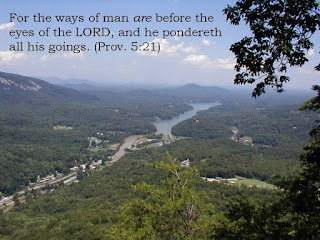
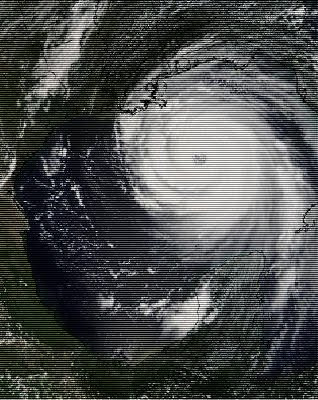
 Do we need to grant God approval for what He does in our world or lives? Should God be responsible to US for the bad things that happen in the world (e.g. hurricanes, tornadoes, fires, volcanoes, deaths)?
The answer to this question is a definite "NO!". He is GOD.
Would we be able to comprehend God's reasons if He gave us an explanation for what He does? Doubtful.
God is in control of a world filled with complicated situations. One event may appear "bad" for us or someone we know, but work for a greater good to dozens of even hundreds of other people. Sometimes the way we respond to these things may be one way God may want to use them to His glory and for a greater good. That is part of responsibility. The word "responsibility" means "the ability to choose my response". In this case, choosing the response we have towards situations or events that we don't understand at first.
Let's say, as way of an example, that I am on my way to work and my car starts to smoke and then bursts into flame. Do you think that people I know will observe and react to my response to this event? You bet they will! They would certainly be forgiving if I threw a fit, jumped up and down and yelled angrily, or even hurled insults and questions towards God above regarding His reasons for allowing this to happen to me. However, if I were to compose myself & respond maturely and in a Christian manner, perhaps my employer would take note and want to know the reason why I would behave as such.
 God does not owe us an explanation for what He does. He is faced with so much complexity (as far as we see it) that, should He try to explain it to us, our minds would almost certainly go into overload trying to grasp it all. Even still, at the end of His explanation, we would still be disapproving -- we aren't divine and would be capable of grasping the entire divine plan before us.
It is for these reasons that we have something called "faith". We have faith in God's power and ability to control our lives and this world in which we live. God can make a change in this world that may bring thousands of people to Him over decades-- but without our faith in God, we might think the change (or event) to be harsh and horrible.
The word "responsibility" means "the ability to choose my response".
As an example of this, think of Hurricane Katrina. This storm did massive amounts of damage. It wiped out thousands of homes and destroyed many millions of dollars worth of property-- not to mention the loss of lives both in humans and animals! These events also forced people who had a heart and ability to do something to go forth and help others. As a result there were many conversions for Christ. There were hundreds of people who learned to place new value on human life! Perhaps this event that so many people said was just the judgement of God was in reality also used as a mean to bring out the spirit of Christianity in people and also to make people aware of their sad state of materialism?

Having put that thought into play, let me ask you a question: How many times have we all completely missed the point God was trying to make? Do we try to understand what may be used to glorify God in our response or do we speak and act in haste in a manner that is not useful or Godly?
We need to prayerfully consider these things and ask God to help us have the faith to act responsibly next time something bad happens in our life.
The Lord's Supper Series - Part 1: Origins Overview
1 comments Posted by Daniel Van Nattan at 2:49 PMToday I’d like to take a brief look at the origins of the Lord’s Table. This act of worship and remembrance obviously goes back to the very start of the church that Christ planted on Earth. But it never hurts to review the origins and reaffirm why we perform this observance faithfully – roughly 2000 years after Christ first established it. The following study I would like to share with you is simply a reminder of why and how it is observed, according to Scripture.
And as they were eating, Jesus took bread, and blessed it, and brake it, and gave it to the disciples, and said, Take, eat; this is My body. And He took the cup, and gave thanks, and gave it to them, saying, Drink ye all of it; For this is My blood of the new testament, which is shed for many for the remission of sins. But I say unto you, I will not drink henceforth of this fruit of the vine, until that day when I drink it new with you in My Father's kingdom. And when they had sung an hymn, they went out into the mount of Olives. (Matthew 26:26-30)
We can see that the Lord and the disciples were meeting for the Passover meal. The Passover was actually a type, in the Old Testament, of the Messiah’s atoning for the sins of mankind.
The first thing that came to my attention when studying the Lord’s Table is that the unbeliever in the room, Judas Iscariot, was thrust from their presence prior to the Lord breaking bread. Though Matthew doesn’t record it specifically we can compare with the account in John and see how it came about.
Jesus answered, he it is, to whom I shall give a sop, when I have dipped it. [A “sop” is literally a “morsel”, usually bread, and dipped in a dish or wine.] And when He had dipped the sop, He gave it to Judas Iscariot, the son of Simon. And after the sop Satan entered into him. Then said Jesus unto him, That thou doest, do quickly. Now no man at the table knew for what intent He spake this unto him. For some of them thought, because Judas had the bag, that Jesus had said unto him, Buy those things that we have need of against the feast; or, that he should give something to the poor. He then having received the sop went immediately out: and it was night. (John 13:26-30)
Because we read in Matthew as well as the gospel of Mark that Christ and Judas had this exchange prior to the Lord’s Table and then in John we see that Judas “went immediately out”, we can safely discern that the Lord made sure that there were no unbelievers at the table when He performed the Lord’s Table for the first time. So we see that, to the Lord Jesus, it was important that Judas not partake of this meal, as his heart was not right with God. From this example it appears obvious that the Lord’s supper is not something to be shared with the world at large – it is a special observance for the body of Christ alone.
On a side note: People sometimes ask why we use plain, unleavened biscuits or bread. The reason unleavened bread was used is that leaven is a type, a picture if you will of sin. One place in the Old Testament that we see this is in the offerings of the tabernacle which pointed to Christ’s work on the cross. It shall not be baken with leaven. I have given it unto them for their portion of My offerings made by fire; it is most holy, as is the sin offering, and as the trespass offering. (Leviticus 6:17)
Then Jesus said unto them, Take heed and beware of the leaven of the Pharisees and of the Sadducees. (Matthew 16:6)
Leaven is clearly a type or picture of sin. Jesus clearly tells us that the bread symbolizes His body. And when He had given thanks, he brake it, and said, Take, eat: this is My body, which is broken for you: this do in remembrance of Me. (1 Corinthians 11:24)
Jesus was sinless - For He hath made Him to be sin for us, who knew no sin; that we might be made the righteousness of God in Him. (2 Corinthians 5:21)
Leaven pictures sin - Bread pictures Jesus' Body Leavened bread would picture Christ as a sinner. Unleavened bread pictures Christ as being sinless. So if we used leavened bread, then we would be picturing the Lord as having sin. So we see even the type of bread that we use is important to picture the death of The Lord correctly. We must picture Him as sinless.
That being said, it is important to note that we should not make a legalistic approach to this subject. Many people would contend that fermentation in the wine Christ would have used also can be used as a picture of sin or imperfection. As there is no specific commandment in the New Testament to use unleavened bread at the Lord’s Table, we should not make this a point of contention with those who differ in belief. We DO have the Lord’s own example to follow and He used the unleavened bread from the Passover meal.
In Matthew 26:26 we note, first of all, that Christ blessed the bread, broke it and passed it to His disciples. The underlying significance is something that we can easily overlook. The significance of this is that Christ was literally blessing His body being tortured and destroyed in one of the most grotesque ways possible!
In my studying I came across an excellent quote that I will share with you regarding this very thing:
“ How amazing it is that Jesus blessed the bread and gave thanks for it! Jesus, Son of the living God, with full knowledge of the torture that lay ahead of Him, actually gave thanks for the breaking of His body. Just a few hours hence His enemies were going to hammer His holy hands to a tree—yet he gave thanks. They were going to take His feet, which had walked many weary miles in the service of the sons of men, and nail them to a cross – yet He gave thanks. His bruised and broken body was to be bowed beneath the weight of the whole world’s sin – yet He gave thanks! ”
Next the Lord blessed the cup and encouraged the disciples to drink it. And again the significance of this event can be easily lost on us! The pure and sinless blood of Christ was to be shed on the cross. His agony would be beyond human comprehension—still he gave thanks! He gave thanks because He saw beyond the tears, beyond the torment, beyond the anguish and pain to the great multitude, from all walks of life, through all ages of time. He could see them, restored, ransomed, forgiven, healed and washed in His blood, saved from their sins forever. He could see them singing and worshipping God and indwelt by His Spirit for eternity! So He gave thanks for His blood which He would soon shed and the symbol of it, which He shared with His disciples.
Finally, we should note that throughout this entire meal Christ was acting through the joy of serving God, His Father. In Matthew 26:30 it says: “And when they had sung an hymn, they went out into the mount of Olives.” This hymn would have been one of the Passover hymns from the “Great Hallel” or Hallelujah Psalms. The Psalms sung at the end of Passover, which is what they had just celebrated, would have been Psalms 115-118. These Psalms are full of rejoicing in the salvation of God and His promises and blessings. Christ, as He was preparing to be sacrificed for our sins, may have sung with rejoicing the words from Psalm 118:28-29: “Thou art my God, and I will praise thee: thou art my God, I will exalt thee. O give thanks unto the LORD; for He is good: for His mercy endureth for ever.”
Here are some notes from a study I did on "Holding forth the word of life"-- From the verse that spawned my blog's title.
1.) We are to hold forth the word of life to a dying world where death and spiritual darkness are virtually everywhere.
a.) "Death metal" music is a prime example of the exact polar opposite of the Word of life.
b.) Real life is something found in Jesus Christ alone. The world will try to counterfeit this everywhere constantly by providing substitutes that make people believe they are filling their empty void with happiness or meaningful purpose.
c.) Life is found in the Word of God and the Lord Jesus. Thus making it the word of life.
2.) "Hold forth" has often been used as a military term. This is far from the only military term Paul uses. He mentions many military style attitudes and terms throughout his writings. This represents a strong stand against a frontal attack. It shows no wavering or backing down and the implication is that you cannot hold forth in a half-hearted manner.
a.) The frontal attack is the attacks of Satan. He is the one who spreads a net for the feet of saints to try to snare them in his traps and thus hinder or halt their efforts to hold forth the Word of life in the Lord Jesus Christ. He is the one who hurls fiery darts at the buckler we are told to carry in our spiritual warfare against evil. Holding forth the word, the sword of the spirit (Ephesians 6:17), gives us our weapon of attack on Satan's accusations and snares (I Timothy 6:9, Revelation 12:9-10).
3.) "The word of life" is coupled with shining as lights in verse 15. Light shines in darkness and shows no mercy to the darkness but quickly overcomes it.
Romans 13:12 The night is far spent, the day is at hand: let us therefore cast off the works of darkness, and let us put on the armour of light.
a.) We need not be ashamed of the light we bear or the word of life we hold forth.
Romans 10:11 For the scripture saith, Whosoever believeth on him shall not be ashamed.
b.) Christ is the light we shine forth. He is the Word and we shine forth that word of faith to all those around us. His Word IS the very essence of light which we hold forth in the stark darkness of the world and its pagan lusts.
Philippians 2:15 That ye may be blameless and harmless, the sons of God, without rebuke, in the midst of a crooked and perverse nation, among whom ye shine as lights in the world;
4.) We must have and maintain a good testimony to not hamper efforts to shine & hold forth the Word!
Philippians 2:14-15 Do all things without murmurings and disputings:
a.) The entire command to "hold forth" seems to hinge on verses 14 and 15 (see above). You cannot hope to hold forth what you believe or preach if you cannot maintain a testimony which shows the Lord's Word of life as the light of the world!
Challenge: Are you holding forth the Word of life and giving off the distinct, hopeful light of the Lord Jesus Christ? If not, why not?
God bless!
Christmas and C.S. Lewis: The two great deceptions
3 comments Posted by Daniel Van Nattan at 10:03 PMI'm a pretty terrible blogger. My wife has been telling me that I need to keep my blog fresh and interesting (i.e. updating it more than once a week, I presume).
For someone who envisioned himself a non-blogger from the start, I'm not doing too bad. :)
Life here in Australia has been interesting. This evening the "reserve" (a park with out any amenities of any sort-- not even a gate or pathway) had some illustrious characters in it. Upon my first assessment of their situation I had thought they were hurling insults at passing vehicles from atop the fence that runs around the outskirts of the reserve. This unremarkable fence is the only thing of any significance in the reserve with the exception of some beautiful trees. I believe that they would have found the trees a bit of a lesser quality perch from which to projectile their remarks at innocent drivers-by. After observing their methods for a moment or two I was favoured with a wind which blew their words distinctly to my ears. Such language should be outlawed! I do believe their exact words were: "Merry Christmas!!" and this was followed up by raucous laughter and what I can only assume was intended as hilarity.
That brings me to an interesting point... what is Christmas and where did it REALLY come from, anyway??
Here's an interesting article on the subject. The article is not very long and shouldn't monopolize too much of your time, so please do give it a read. If nothing else it might make you cranky at me. But as in most of these situations, you must first get cranky before you open your mind to the possibility that you have been foolish in celebrating a devilish "holiday".
Here's a excerpt that you might find particularly picante:
...within the Christian Church no such festival as Christmas was ever heard of till the third century, and...not till the fourth century was far advanced did it gain much observance. How, then, did the Romish Church fix on December 25th as Christmas-day? Why, thus: Long before the fourth century, and long before the Christian era itself, a festival was celebrated among the heathen, at that precise time of the year, in honour of the birth of the son of the Babylonian queen of heaven; and it may fairly be presumed that, in order to conciliate the heathen, and to swell the number of nominal adherents of Christianity, the same festival was adopted by the Roman Church, giving it the name of Christ." (2) In pagan Rome, the celebration of the Winter Solstice began on December 17 with the feast of Saturn -- also called the Saturnalia. Through December 23rd, the Roman world engaged in merrymaking and the exchanging of gifts in honor of Saturn, the god of sowing and husbandry and, according to a Rosicrucian source, to commemorate a future Golden Age of Saturn:
Interesting stuff, huh?? Well check it out!
The good thing about this article is that the author actually backs up his claims with solid research which he cites as any good author should.
Enjoy your holidays... But certainly don't have a merry Christmas!
Now if that didn't make you mad... THIS will!
I've noticed that FAR too many people love C.S. Lewis, but most people do not have even the foggiest clue as to the man's true character! They do not know that he said that Biblical prophecies were false and that he also worked sun worship, drug abuse and other henieous elements into his books.
Want a good read? Check THIS out!
And for good measure, another quote:
While many of us have been deceived by this man's apparent spiritual insight, he actually believed many doctrines of devils and by the end of his life was rapidly embracing Roman Catholicism and Taoism. Indeed, he may have been a Catholic for some time before his death. He believed in purgatory and prayed for the dead. He went to a priest regularly for confession (C.S. Lewis: A Biography , p. 198). He received the sacrament of extreme unction on July, 16th, 1963 (p. 301), a sacrament that was officially ministered only to Roman Catholics at that time. It is enough to cause one to wonder if whether he was a "plant" for the Catholic church all along, or merely a mixed up man groping for some hope of salvation at the end of his life.
Enjoy... until next time...
Subscribe to:
Posts (Atom)